Learning about multiple sclerosis can be intimidating. Let our experts walk you through the facts, the questions, and the answers to help you better understand this condition.
Video timeline: 0:24 What is multiple sclerosis? 1:15 Types of multiple sclerosis 1:29 Who gets multiple sclerosis/risk factors? 3:11 Multiple sclerosis symptoms 3:40 How is multiple sclerosis diagnosed? 4:39 Treatment options 5:29 Coping methods/ What now? 6:23 Ending
Chronic kidney disease, also called chronic kidney failure, involves a gradual loss of kidney function. Your kidneys filter wastes and excess fluids from your blood, which are then removed in your urine. Advanced chronic kidney disease can cause dangerous levels of fluid, electrolytes and wastes to build up in your body.
Video timeline: 0:31 What is kidney disease? 1:09 Who gets kidney disease/risk factors? 2:24 Kidney disease symptoms 3:03 How is kidney disease diagnosed? 3:53 Treatment options 5:23 Coping methods/ What now? 6:16 Ending
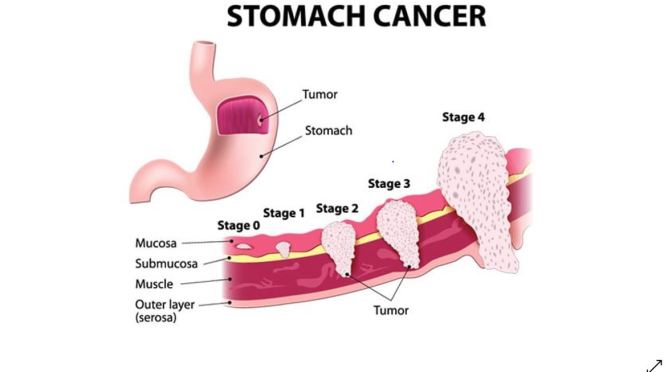
Risk factors for #StomachCancer in the stomach body: a diet high in salty/smoked foods or low in fruits/veggies; family history of this cancer; infection with Helicobacter pylori; long-term stomach inflammation; pernicious anemia; smoking; stomach polyps https://t.co/jTTOwq4NEopic.twitter.com/Vr4xYKv0mp
— Mayo Clinic Comprehensive Cancer Center (@MayoCancerCare) November 11, 2021
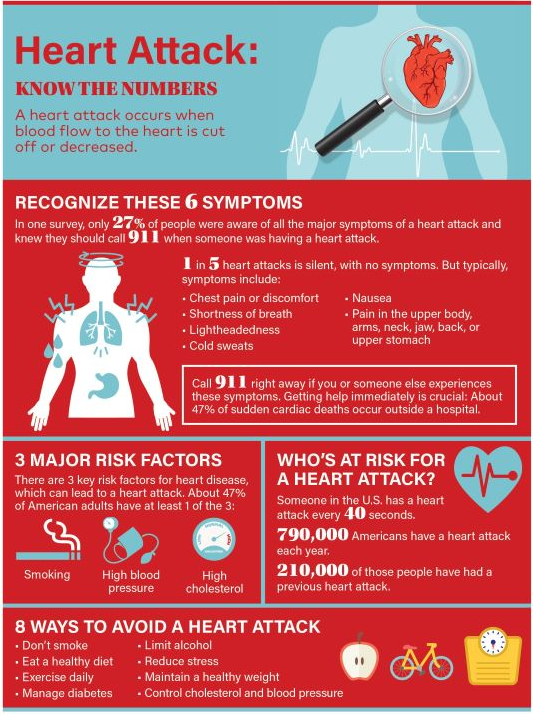
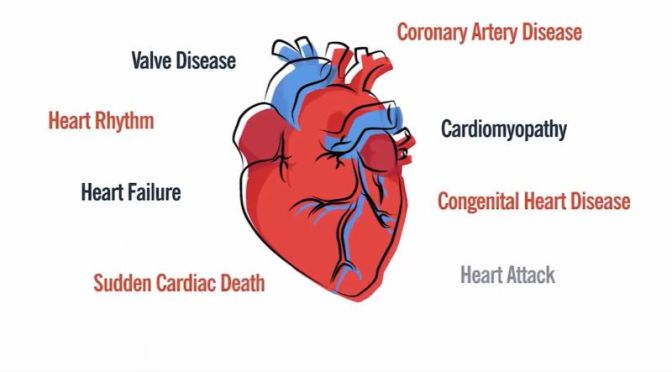
Heart attacks are something that most people know about; the sudden severe chest pain, radiating into the jaw or left arm, associated with shortness of breath, nausea, and the like. However there’s a lot of confusion also; not all heart attacks have typical symptoms (silent heart attacks). Some significant chest pain is not due to a heart attack, and some significant cardiac disease is something different from a heart attack.
I will cover these three scenarios one at a time, beginning with the most dangerous, the silent heart attack.
The silent heart attack has the same effect as the more typical variety, and is caused by blockage in the coronary arteries, which interferes with oxygen and glucose delivery, and causes death of heart muscle. It occurs under physically or emotionally stressful circumstances, particularly in the cold. It may be more common in women, and accounts for at least half of all heart attacks.
Risk factors are identical to those of a regular heart attack, and include being overweight, diabetic, not exercising regularly, having high blood pressure, high cholesterol or smoking cigarettes.
The symptoms may be Flu like, fatigue, indigestion, and perhaps a soreness in the chest, upper back, arms or jaw. My mother-in-law died in my house after a stressful incident, and was heard to be vomiting in the middle of the night. My father had inordinate fatigue and paleness, which caused my mother to take him to the doctor, who sent him by ambulance for a bypass operation.
Many silent heart attacks are discovered when the doctor takes an electrocardiogram in the course of an examination. This is a good argument for the regular physical examination, since having a silent heart attack increases the likelihood that you will have another.
The frequency and seriousness of heart attacks is of course an excellent argument for proper sleep, diet, exercise, and other good preventative habits.
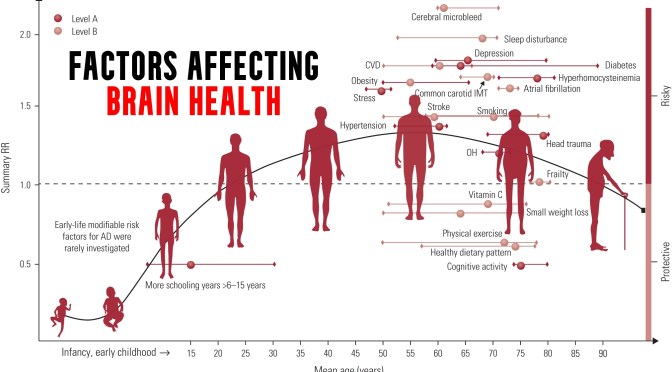
Opportunities for enhancing brain health across the lifespan
Published online by Cambridge University Press: 22 March 2021
Summary
As we age, there are characteristic changes in our thinking, reasoning and memory skills (referred to as cognitive ageing). However, variation between people in the timing and degree of change experienced suggests that a range of factors determine individual cognitive ageing trajectories. This narrative review considers some of the lifestyle factors that might promote (or harm) cognitive health. The focus on lifestyle factors is because these are potentially modifiable by individuals or may be the targets of behavioural or societal interventions. To support that, the review briefly considers people’s beliefs and attitudes about cognitive ageing; the nature and timing of cognitive changes across the lifespan; and the genetic contributions to cognitive ability level and change. In introducing potentially modifiable determinants, a framing that draws evidence derived from epidemiological studies of dementia is provided, before an overview of lifestyle and behavioural predictors of cognitive health, including education and occupation, diet and activity.
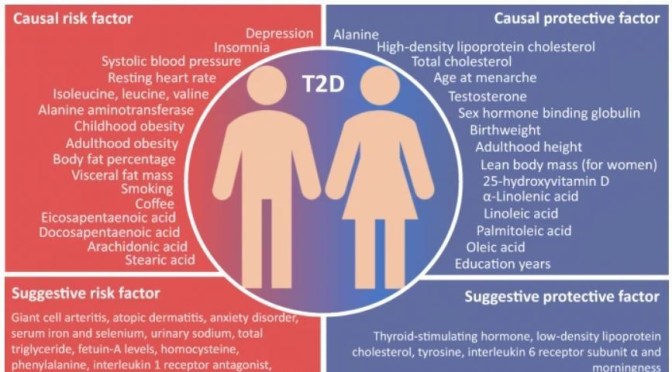
Diabetologia (Sept 8, 2020) – Insomnia with objective short sleep duration has been associated with an increased risk of type 2 diabetes in observational studies [27, 28]. The present MR study found strong and suggestive evidence of a causal association of insomnia and short sleep duration, respectively, with increased risk of type 2 diabetes.
Conclusions/interpretation
The present study verified several previously reported risk factors and identified novel potential risk factors for type 2 diabetes. Prevention strategies for type 2 diabetes should be considered from multiple perspectives on obesity, mental health, sleep quality, education level, birthweight and smoking.
This was a laborious and apparently objective study.
The discovery of insomnia as a unique risk factor is no surprise, and reinforces the restorative IMPORTANCE of SLEEP.
I was surprised to see docosohexanoic and Eicosapentanoic acids in the risk column and LDL in the good column. However they were studying type 2 diabetes, and not vascular health. I will continue to take my fish oil, and enjoy my HDL, which is in the good column.
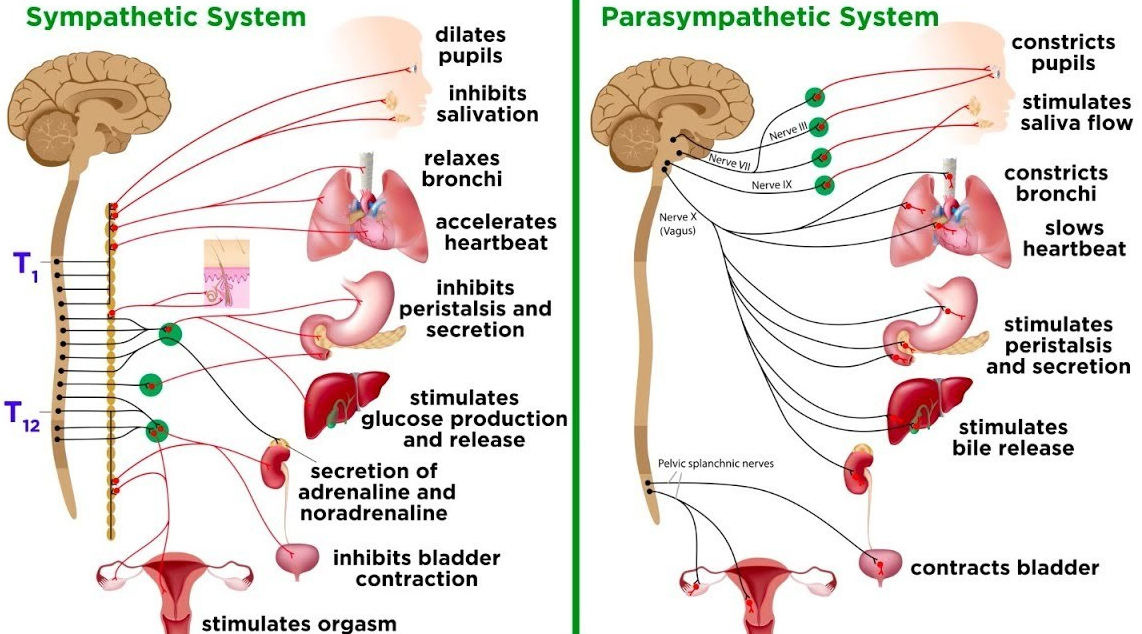
Dizziness, Fainting, Falls, Orthostatic Hypotension, Heart rate and rhythm, Cardiac output and Perfusion, The Autonomic Nervous system,
Falls and Injury are all very interconnected. They all tend to accumulate as we age, but the young are not immune to these conditions. In all of these discussions,
I make the ASUMPTION that you have these conditions in an undramatic, infrequent, moderate way, and are not burdened by Risk factors such as diabetes and hypertension. Stroke is always a worry lingering in the background, and will be discussed at the end of the series.
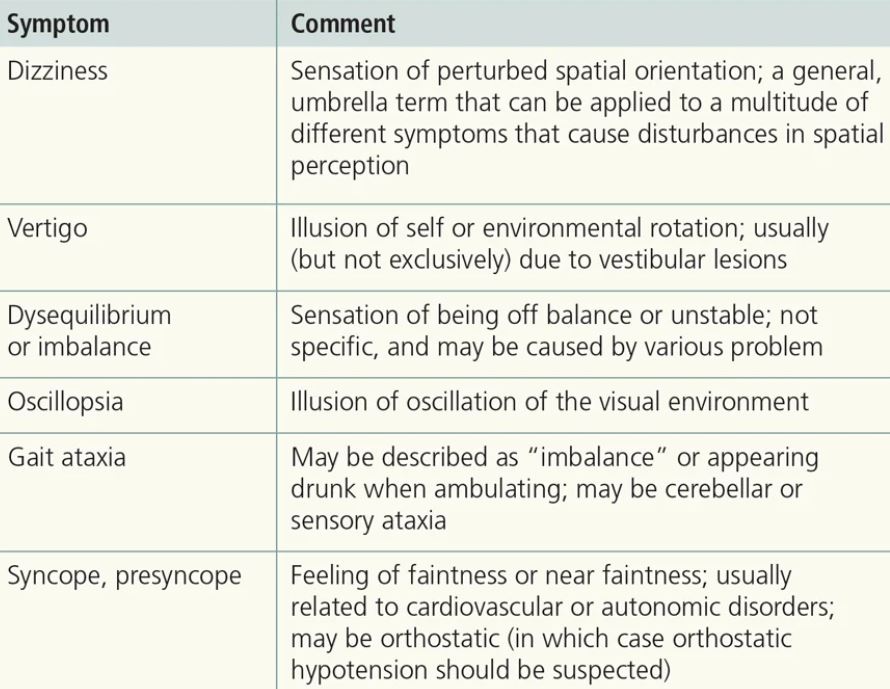
I will begin with DIZZINESS AND FAINTING. The amazing thing is that we are able to walk upright all day without falling. We can surprisingly lie on our backs, suddenly get up and run away seamlessly, or at least we were able to do these things, most of the time. Our bodies almost magically supply our brains and balance mechanisms with the right amount of blood and nourishment ALMOST all of the time.
Everybody gets dizzy if they spin around enough, and even young people can faint if they stand long enough in one place. Dizziness and fainting is usually considered normal if there is a good explanation. It is when they are too sudden, too severe, last too long, or happen too frequently that we seek medical Help.
Dizziness can mean “lightheadedness” without the room spinning. This is often more concerning than Vertigo, since it more often is due to a lessening of blood flow to the brain. When we get up suddenly from a sitting or lying position, the blood may pool in our abdomen and legs, with consequent insufficient pumping of blood to the brain.
This happens at 1G to civilians, but it takes about 5Gs for young jet pilots to need their “blackout” suits. Instead of blackout suits, we can use support-hose, or even a constricting pants-suit which includes our lower abdomen.
I have also been using a buzzer-timer which reminds me to walk every 10 minutes, to keep me from staying in my comfortable lazy-boy too long. I try to walk rapidly and breathe deeply, and believe this helps keep my body “toned up” and responsive for when I stand up rapidly.
The other way to adapt would be to “baby” my body, and stand up more slowly. There are always the opposite ways to respond: go easy, or push the body and expect it to adapt. If you are worried, your Family Doctor can help you and suggest a path forward .
Perhaps you are overmedicated, need medication, or some tests would help clarify the situation. Vertigo is where the room seems to be spinning. You might be able to tell whether it is spinning clockwise or counterclockwise.
The most common cause is BPPV, or benign periodic positional vertigo, and you can wait it out. Look it up on the internet for parameters. Persistent Vertigo can also be due to inner ear (labyrinth) problems. which an ENT Doctor can address.
For more details, I have included a couple of good articles. A discussion of Falls is next in this series.



 Doctors Without Waiting Rooms