


Psoriasis is a skin disease that causes a rash with itchy, scaly patches, most commonly on the knees, elbows, trunk and scalp.
Psoriasis is a common, long-term (chronic) disease with no cure. It can be painful, interfere with sleep and make it hard to concentrate. The condition tends to go through cycles, flaring for a few weeks or months, then subsiding for a while. Common triggers in people with a genetic predisposition to psoriasis include infections, cuts or burns, and certain medications.
Treatments are available to help you manage symptoms. And you can try lifestyle habits and coping strategies to help you live better with psoriasis.
COMMENTS ON ‘PSORATIC ARTHRITIS’:
My practice was restricted to allergy, but I saw many patients with psoriasis. The red scaly patches made them think they had allergic dermatitis, eczema. Psoriasis on the arm is usually located on the elbow, and atopic dermatitis on the opposite side, in the flexural area. Thick, pitted fingernails are also common in psoriasis. It’s combination with arthritis is worrisome.
Psoriasis will usually develop first, and the psoriatic arthritis will follow years later, but 10% of the time the arthritis Is the first problem. This form of arthritis can be very painful, and cause deformities. It is often worse than rheumatoid arthritis, although does not affect as many joints, and is often asymmetrical. It inflames the area where tendons attach to the bone, which is one of the reasons that it can be more painful than rheumatoid arthritis.
Psoriasis is an autoimmune problem and can involve practically any organ in the body.
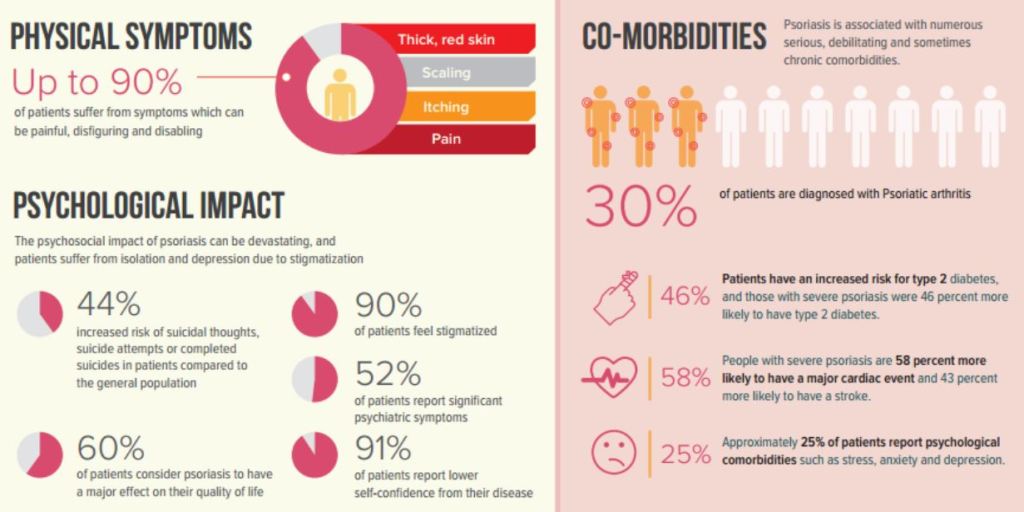
It is often associated with metabolic syndrome and diabetes.
Psoriatic arthritis does not have the rheumatoid serum markers that can help diagnose rheumatoid arthritis, and unless psoriasis is also present on the skin, it can be hard to diagnose.
Symptomatic treatment with NSAIDs, physical therapy, phototherapy and topical treatments can be helpful, but very expensive biologics are sometimes needed to help out methotrexate and other first line DMARDs (Disease modifying antirheumatic drugs).
This condition can be progressive. If you develop scaly red patches on your skin, be sure to check with the doctor about the possibility of psoriasis.
—Dr. C.

 Doctors Without Waiting Rooms