Tag Archives: Hypoglycemia

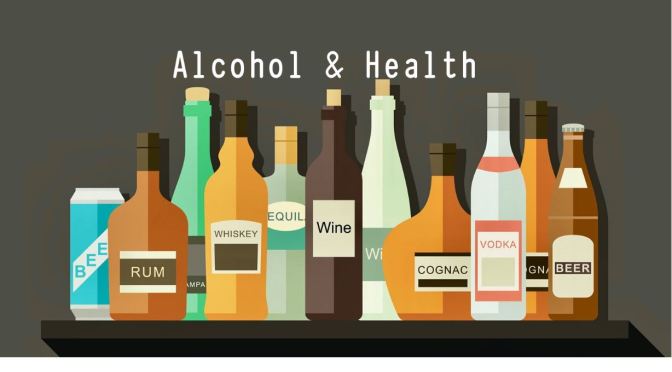
Doctor’s Journal: ‘Alcohol And Health’

Alcohol has been used by mankind since before recorded history. It causes a pleasant slowdown of the nervous system, Lessening inhibition  and loosening the tongue, making it the perfect lubricant for social interaction. Unfortunately, it is a metabolic poison.

Excess alcohol use is common enough to have resulted in its prohibition in the United States in the 20s. The side effects of this prohibition proved worse than its benefits, and alcohol currently enjoys the status of one of the few legally permitted Psychoactive drugs.
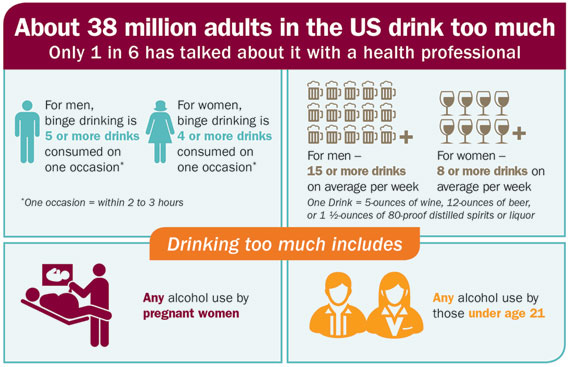
After diligently searching for beneficial effects of alcohol, society discovered that mild drinking promotes longevity. It is difficult to drink just the right amount of alcohol, and  There is little doubt that excessive drinking is deleterious to the body.

The liver is the organ responsible for getting rid of alcohol. Unfortunately, liver function gradually declines with age, so that the older you get the less alcohol you can tolerate. 14 drinks a week is the suggested upper limits for alcohol’s benefit, and this number shrinks as you get older.

I became interested in alcohol in the elderly because of a friend whose doctor discovered that his red blood cells were enlarged. This can be due to alcohol in at least two different ways. If you drink too much alcohol, you need less calories, and often have a poor diet as a result. B12 (and folic acid) deficiency can result and may cause large red blood cells.

I also learned that alcohol can directly caused large red blood cells because of the toxic effects on the bone marrow, where Red blood cells are made. The very young also have more difficulty with alcohol. Early in my career I discovered 2 young infants who had convulsions after getting into their parents wine closets. These convulsions turned out to be caused by a low blood sugar which developed because glucose, the common blood sugar, is consumed in the process of burning, or metabolizing, alcohol.

My own use of alcohol has been progressively declining with age. I feel good with less alcohol for a shorter time the older I get.
—Dr. C.

ORTHOSTATIC HYPOTENSION: ITS SYMPTOMS AND CAUSES

Our Nervous system is much more than consciousness and free will. Our neural networks automatically go about the job of keeping us alive without entering our awareness- unless it fails to perform.

This is true of our intestinal system, and especially our cardiovascular system. We would not have time for anything else if we had to consciously take each breath, command each heart beat, and for this discussion, open up (dilate) the blood vessels to our brain, and constrict the blood vessels in our legs whenever we stand up.

Our brains demand a constant supply of Oxygen and Glucose in order to perform their complex duties. Between 20% and 40% of the 100 Watts of energy our bodies consume is in our brains.

Whenever we stand up, the force of gravity “wants” to force our blood to our legs and away from our head. Unless that tendency is counteracted, our brains would be deprived of essential factors, and we would all have orthostatic (upright position) hypotension every time we stand up.

Normally, when the blood pressure drops from ANY CAUSE, receptors near the base of the heart and great vessels signal the sympathetic branch of the autonomic nervous system to cause a speeding up of the heart and a dilation of the blood vessels in the brain. This compensates for the drop in blood pressure, which is determined by the blood flow and resistance to that flow.

The sympathetic nervous system is a reaction to STRESS, to a “flight or fight” decision. In the short term, it is beneficial, or adaptive. You may know the feeling, heart racing, cold hands (due to constriction of blood vessels), breathing rate increases, and sweating.

The asthmatic feels this from a shot of adrenalin, which delivers the sympathetic reaction to the whole body through the blood stream. The musculature of the bronchial tubes are relaxed, improving breathing, and improving the asthma.

What is adaptive in the short haul may be deleterious if it continues, felt as Anxiety if it lasts too long.

ORTHOSTATIC (postural) HYPOTENSION may be made worse by a variety of other influences, such as an abnormally slow heart, rate, dehydration, blood loss, certain medications and standing still too long.

Since the brain needs both Oxygen and Glucose, High altitude or a
low blood sugar will also facilitate faintness. If you have a tendency toward lightheadedness when you stand up, be careful lest you fall and injure yourself.

If you are unable to cope with these spells, a checkup with your Doctor may be in order; perhaps you have an underlying problem, such as with your heart, which is the next subject of discussion.

–DR. C