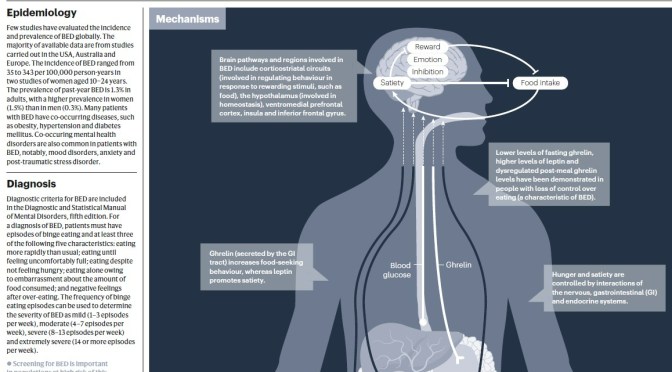
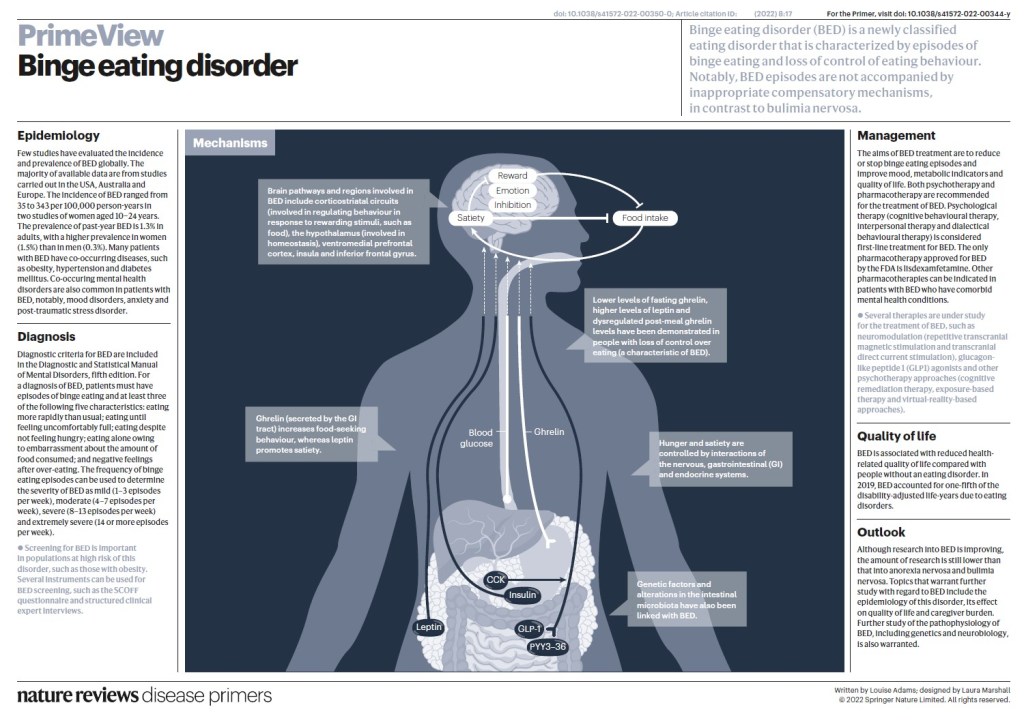
Binge eating disorder (BED) is characterized by regular binge eating episodes during which individuals ingest comparably large amounts of food and experience loss of control over their eating behaviour. The worldwide prevalence of BED for the years 2018–2020 is estimated to be 0.6–1.8% in adult women and 0.3–0.7% in adult men. BED is commonly associated with obesity and with somatic and mental health comorbidities. People with BED experience considerable burden and impairments in quality of life, and, at the same time, BED often goes undetected and untreated.
Most people with binge-eating disorder are overweight or obese, but you may be at a normal weight. Behavioral and emotional signs and symptoms of binge-eating disorder include:
Eating unusually large amounts of food in a specific amount of time, such as over a two-hour period
Feeling that your eating behavior is out of control
Eating even when you’re full or not hungry
Eating rapidly during binge episodes
Eating until you’re uncomfortably full
Frequently eating alone or in secret
Feeling depressed, disgusted, ashamed, guilty or upset about your eating


 Doctors Without Waiting Rooms