

Tag Archives: Dermatologist

THE DOCTORS 101 CHRONIC SYMPTOMS & CONDITIONS #36: WARTS

Warts are so common as to have become a metaphor for any blemish. I have had several warts in childhood, most likely because my immunity was immature along with the rest of me. They went away, as do most warts. I have had a few warts on and off since, since the HPV that produces them is so widespread.
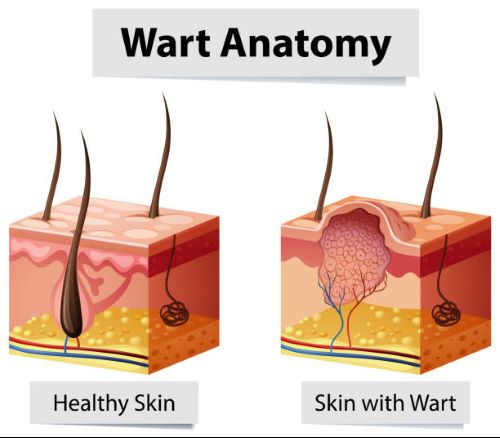
My immune reaction took care of them, For some reason, I now have a wart between my toes that bears watching. Hopefully it will go away like the rest. Warts rarely become malignant, They can cause problems with breathing if they block the airway, such as the larynx (voice box) or bronchi (breathing tubes). I had such a case in my Allergy/respiratory disease practice that sounded like asthma to the referring Doctor.

Elderly people can develop a variety of skin bumps, that my grandmother called “moles”. In the past month, I have developed a reddish bump on my nose. It looks a lot like the “intradermal nevus” pictured in an accompanying article from “consultant360”. Seborrheic Keratoses are common, and I have some of those too. Of course,

I have a regular crop of scaly “actinic Keratoses” for my Dermatologist to freeze with liquid Nitrogen during my twice yearly visits to prevent them from developing into cancer. I have a suspicion that many home remedies for warts, and the scraping and freezing efforts of dermatologists merely stir up the infected cells in the lesion and incite the immune system to mop up.

Time will usually do the job, but they are often annoying and there is always the temptation to treat them.


–Dr. C.

Read more

TELEMEDICINE: CHECKLIST – DERMATOLOGIST SESSIONS

According to the American Academy of Dermatology, “The technology has reached a point where, in many situations, health care providers can use IT to offer quality health care services remotely,” and they support telemedicine as an additional treatment tool to supplement in-person services.

To get the most from your telemedicine appointment, board-certified dermatologists offer these tips:

  1. Contact your insurance provider to find out if your plan covers telemedicine appointments. Many insurance providers are updating their plans to cover telemedicine visits during the coronavirus pandemic. Find out what type of telemedicine visits are covered by your insurance.
  2. Gather essential information. This is especially important if you have a telemedicine appointment with a dermatologist you haven’t seen before. Knowing your medical history will help your dermatologist make a diagnosis, decide treatment options, and prescribe medicine, if necessary. Ask your dermatologist’s office if they have any forms you need to fill out before your appointment.Before your appointment, make a list of the following:
    • Medications you take
    • Major illnesses or surgeries you have had
    • Previous skin problems
    • When your current symptoms began
    • Your allergies
    • Illnesses that your family members have had, such as cancer, heart disease, or diabetes
  3. Find out how to reach your dermatologist. Talk to your dermatologist’s office to make sure you know what type of telemedicine appointment you will have, and how your dermatologist will reach out to you. Ask when and how to send the pictures and information you gather.
    • For video visits, you will be sent a website link you can use to connect with your dermatologist at the time of your appointment.
    • For telephone visits, you may be given instructions on when to expect a call from your dermatologist.
    • undefined
  4. Write down all your questions. Doing this helps you remember everything you plan to talk to your dermatologist about and make the most of your appointment.
  5. Take pictures. To help your dermatologist examine your concern, take clear pictures of the areas you need examined. Follow these tips to make sure the pictures are the highest-possible quality:
    • Make sure your pictures are well-lit. Take your pictures in natural light, if possible. Use another light source, like a book light or flashlight, if needed. Make sure that there aren’t any shadows or glares on the area you are taking pictures of.
    • Take multiple pictures, including one of each side of the area you need examined. Make sure to show the entire area around your spot or rash. If your spot is hard to see, you may want circle it or draw an arrow pointing toward it with a marker.
    • Take pictures to compare. For example, if you have a spot on your hand, take pictures of both hands so your dermatologist can see how that area usually looks. Make sure you also take a close-up and a far-away picture of the areas you are concerned about so your dermatologist can compare.
    • Just like an in-person dermatologist appointment, do not wear makeup. If you need your nails examined, take off any nail polish you have on before taking any pictures.
    • Get help. If you live with someone, ask them to take pictures of hard-to-reach areas, such as your back. If you live alone, use a mirror to make sure you are taking pictures of the right spot.
    • If your picture turns out blurry, delete it and replace it with one that is clearer.
  6. Avoid irritating your skin before your appointment. Try to avoid doing things that could change the appearance of your skin before you begin your telemedicine appointment or take your pictures. Some examples of things to avoid are taking a hot shower, rubbing or picking at your skin, or applying skin care products.
  7. Find a private space. Find a quiet and private space without distractions to have your appointment. Make sure you can connect to the internet in that space and it has the best-possible lighting.

For more information