Tag Archives: Breathing

Dr. C’s Journal: Rib Fractures & Cracks

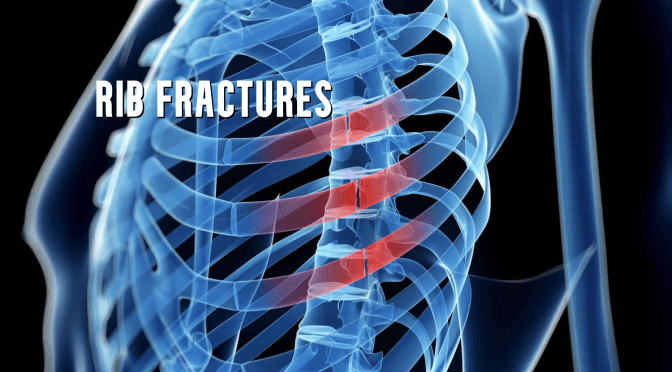
Broken ribs are fairly common, and if you’ve ever had one, you don’t want another. A rib fracture causes lots of pain, which is worse when you take a deep breath, press on the area, or twist your body.

The pain on taking a deep breath creates a catch 22, because taking a deep breath every few minutes is a good idea, if not essential to keep your lungs open and functioning, yet you don’t want to do it because it hurts a lot.

A rib fracture is usually caused buy a direct trauma to the chest from a fall, automobile accident, or sport.
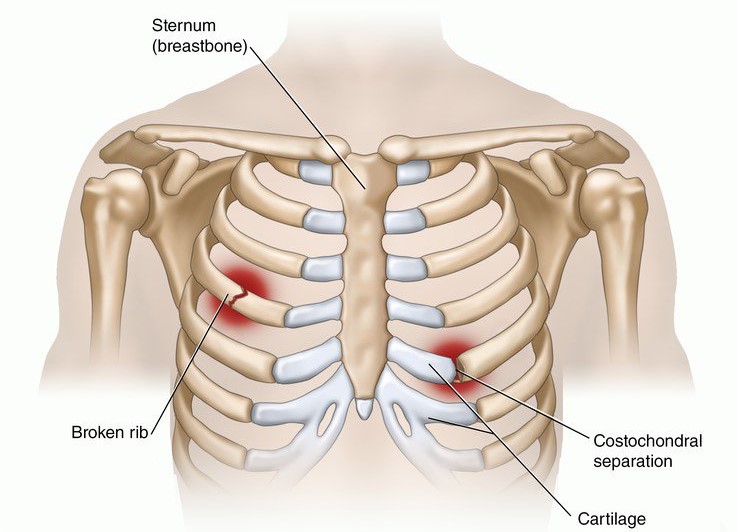
Repetitive minor injury can also cause rib fractures. This can occur when you escalate your exercise to rapidly and stress a bone, like in the foot, or when you have a chronic cough that’s violent and continuous, which could cause a stress rib fracture.

Interestingly, children age 10-12 can stress their chests enough with a heavy backpack to cause a problem where are the ribs meet the breastbone, called the costochondral junction.

Any severe chest pain raises concern for heart disease, and the fact that it is worsened by pressure on a certain area, or by taking a deep breath can be reassuring. The doctor should be contacted depending on the severity of the pain and how certain you are it is related to trauma.

Of course, if the pain in the middle of the chest, feels like pressure or radiates, You would be foolish not to go to emergency room. The treatment for a rib fracture no longer includes taping the chest, but rather continuing to take occasional deep breaths and use medication if needed for pain.

Of course you need a doctor’s diagnosis in order to continue doing this. If the Fracture was due to a fall, you should definitely educate yourself on how to avoid falls in the future. In July 2020, I posted an article on falls that you could access by typing “falls” into the question box.

There are a variety of things you can do to prevent falling: remove clutter in the house, strengthen your muscles, check your eyesight, hearing, proprioception, and balance. There are even programs for teaching the elderly HOW to fall.

Please refer to the mayo clinic article on broken ribs for more detail.
—Dr. C.

Mayo Clinic Article

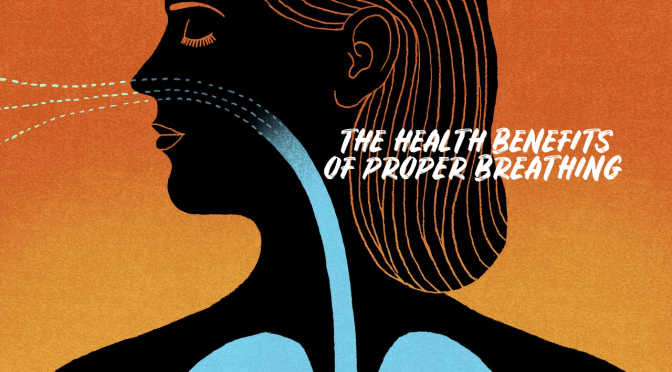
PREVENTION: THE HEALTH AND HEALING BENEFITS OF PROPER BREATHING

From a Wall Street Journal article (May 21, 2020):

Breathing properly can allow us to live longer and healthier lives. Breathing poorly, by contrast, can exacerbate and sometimes cause a laundry list of chronic diseases: asthma, anxiety, attention deficit hyperactivity disorder, hypertension and more. Poor breathing habits can even change the physical structure of our skeletons, depleting essential minerals and weakening our bones.

Most of us misunderstand breathing. We see it as passive, something that we just do. Breathe, live; stop breathing, die. But breathing is not that simple and binary. How we breathe matters, too.

Last year, I wanted to see just how dramatically breathing habits—good and bad ones—could affect my own brain and body. I’d learned that up to 50% of us are chronic mouth breathers, a problem well described by an ancient Tao text: “The breath inhaled through the mouth is called ‘Ni Ch’i, adverse breath,’ which is extremely harmful.”

Scientists have known for decades that inhaling through this pathway saps the body of moisture, irritates the lungs and loosens the soft tissues at the back of the mouth. Mouth breathing has also been linked with neurological disorders, periodontal disease and increased risk of respiratory infection. But nobody knew how quickly this damage came on.

Read full article

COMMENTARY

Breathing is something we don’t think about. It comfortably transcends the merely habitual, and there is a complex of controllers in the brain to Drive breathing should we be unable or forget to breathe voluntarily.
Breathing has it’s own poets and cults, one of which is MINDFULNESS MEDITATION, which uses our BREATHING as the focus of our consciousness, to get us outside ourselves.

With DEEP breathing,  I noticed an INCREASED pO2, as registered on my Pulse Oximeter.

In the 1960’s asthma was not so well controlled as now. The mechanics of breathing were more important, so we taught our Patients how to breathe properly.

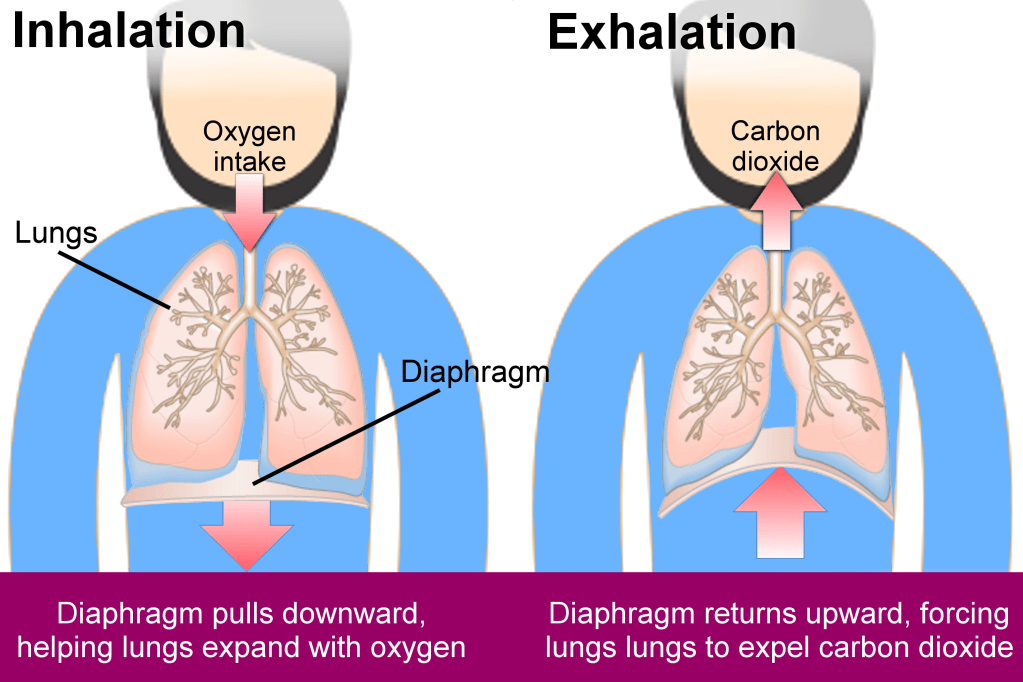
There are 2 sets of muscles we use to EXPAND our lungs, the DIAPHRAGM at the bottom of the chest, and the chest muscles themselves, the INTERCOSTALS. We refer to diaphragmatic breathing as “stomach” breathing, because the stomach bulges out as the descending diaphragm compresses the abdominal contents.

We refer to intercostal breathing as “chest” breathing because the chest expands when the inspiratory intercostals contract.

Diaphragmatic breathing is more efficient, and we encourage our asthmatic patients to Use their more efficient diaphragm to prevent them from tiring as they struggle to get their air out through their narrated airways.

You can squeeze a little extra air out of your lungs by contracting your abdominal muscles.

So to take a DEEP BREATH, see that your stomach rises and your chest expands with the breath IN, and that you squeeze both your abdomen and your chest with the breath out.

Your AIR SACS expand, your lungs are flushed with fresh air, and you blood oxygen, and BRAIN OXYGEN INCREASES with a deep breath in. The “stale air” is cleared by a full breath out.

When you are quietly breathing, letting that vital process take place automatically, notice that a deep breath, or “sigh”, occurs about once every 2 minutes. This is nature’s way to help lung surfactant PREVENT LUNG COLLAPSE and PNEUMONIA.

It is HEALTHFUL to PAY ATTENTION to your BREATHING occasionally! If uninclined to breathe deeply yourself, take a brisk walk up a hill, and let Nature do it for you.

—Dr. C.

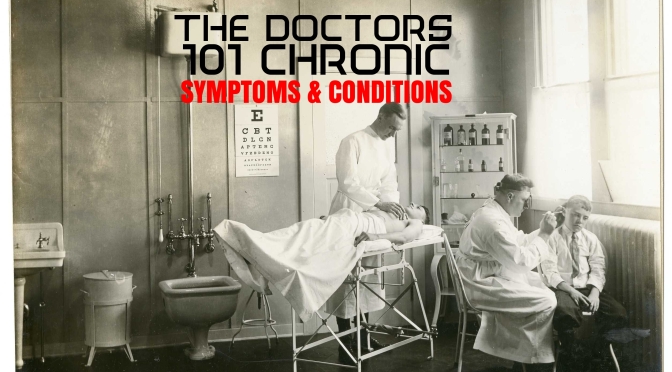
THE DOCTORS 101 CHRONIC SYMPTOMS & CONDITIONS #2: NASAL CONGESTION

Chronic nasal congestion, the constant condition of not being able to breathe through your nose, can be a major problem, interferes with sleep (often via sleep apnea), undermining one of the 4 pillars of health (sleep, diet, exercise and intellectual stimulation). Well, maybe a second one as well, since it is hard to function intellectually when you are sleepy all the time.

Chronic nasal congestion in kids is often due to allergy and associated ADENOID (located at the back of the throat) ENLARGEMENT. Adenoids can cause sleep apnea and pulmonary hypertension, ear infections and sinusitis.

If left untreated, the bones of the face don’t grow properly, and the constricted bony structures can lead to later problems. Nasal polyps can be a factor in nasal airflow blockage, and their removal may benefit the blockage.

If associated with sinusitis and aspirin (aspirin is rarely used in children anymore because if Reyes’ Syndrome) sensitivity, the combination is known as “sampters’ triad. Regrowth of the polyps is common and aspirin desensitization may be helpful.

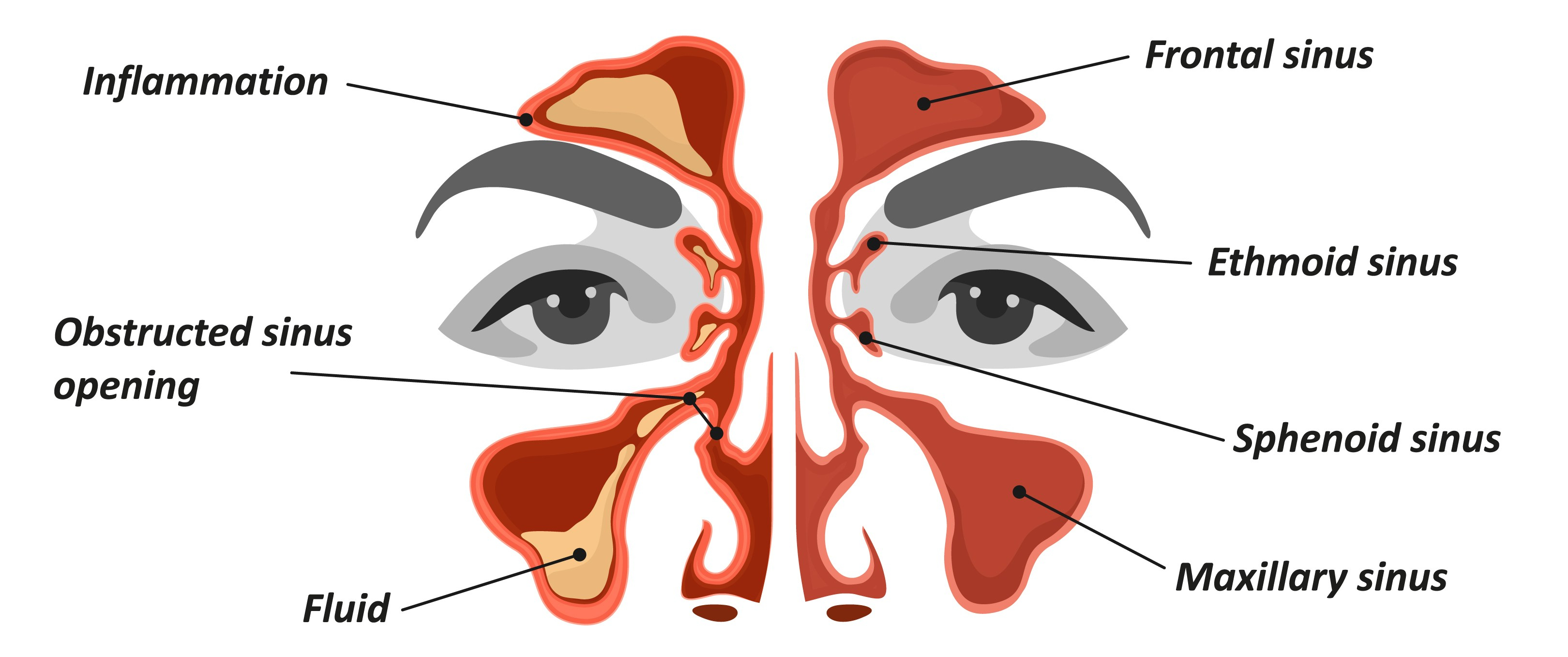
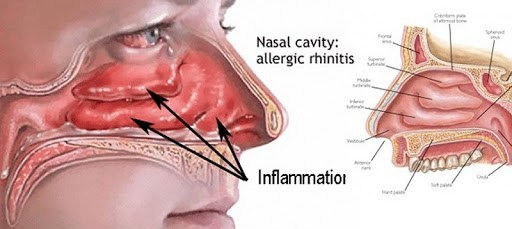
ALLERGIC RHINITIS is treated by avoidance, medication and desensitization. SINUSITIS can cause chronic nasal blockage. Both medical and surgical treatments are useful.

One-sided nasal blockage raises a red flag. One of my young patients had pushed a rock into his nose, which I then removed. Nasal polyps can be on one side, and can be removed, NASAL SEPTAL DEVIATION can cause one-sided nasal blockage, and if severe can be surgically corrected.

The nasal tissues are “erectile tissues” I have a nasal septal deviation to my left side. I SLEEP ON MY SIDE to CONTROL my SLEEP APNEA (more when I get to that subject, which certainly qualifies as a chronic problem), When I sleep on my right side, I don’t breathe as well since my “good side” is down and becomes study.

Those lucky people who breathe freely on both sides, and who sleep on their sides, may possibly be aware that the DOWN SIDE (my good side, above) blocks up. It seems that the nasal tissues are “erectile tissues” body wants to REST one side at a time, and the down side is easier, since gravity pools the blood there.

Nasal tissues are under the control of the autonomic nervous system, decongest (nasal passages are open) with the alarm (fight or flight, “sympathetic”) reaction, and do the opposite (tissues congest, nasal passages close) when the “parasympathetic” takes over after a meal, when you are “vegetating”. in front of the TV