
Tag Archives: Acetaminophen

OTC Pain Relievers: Types & How To Safely Use Them

The two main categories of commonly used pain relievers (also known as analgesics) are acetaminophen and nonsteroidal anti-inflammatory drugs (NSAIDs).

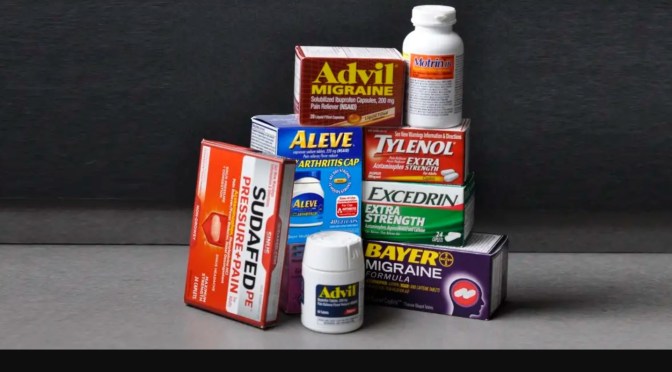
  • Acetaminophen (Tylenol) controls pain and fever but doesn’t help with inflammation. It’s an active ingredient in many drugstore headache and cold remedies.
  • NSAIDs include aspirin, ibuprofen (Advil, Motrin), and naproxen (Aleve, Naprosyn). These ease pain and lower fever like acetaminophen, and also work as anti-inflammatories. NSAIDs are popular pain relievers for inflammation-related conditions like arthritis and injuries.
Potential side effects

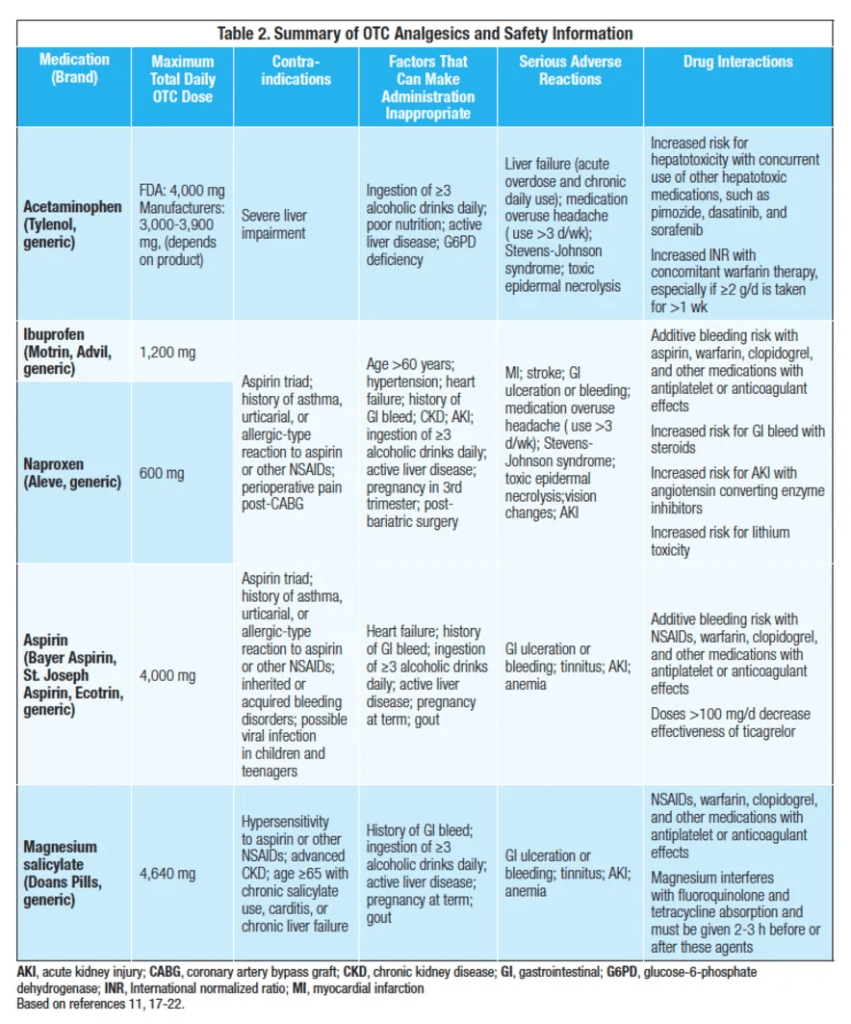
Acetaminophen. High doses can damage the liver. The maximum recommended per day is usually 4,000 milligrams (mg), equivalent to 12 regular-strength or eight extra-strength Tylenol tablets. It’s also possible to develop liver problems after taking small to moderate amounts if done so over an extended period.

To be safe, take no more than 3,250 mg of acetaminophen a day. The FDA recommends using products containing no more than 325 mg per pill or capsule to avoid excessive dosages. Also, be cautious when mixing multiple products containing acetaminophen, such as a pain reliever, a cold medication, or a prescribed narcotic. “And do not take acetaminophen if you drink alcohol more than moderately on a regular basis or if you have liver disease,” says Dr. Gilligan.

NSAIDs. The most common side effect is stomach irritation which may cause pain, bloating, or heartburn. These medications also may cause ulcers, which can lead to internal bleeding. Excessive use of NSAIDs increases the risk of heart attack, stroke, and kidney failure. The most common daily limits are 1,200 mg for ibuprofen and 660 mg for naproxen.

All NSAIDs (except aspirin) tend to boost blood pressure. While the effect is most potent in people who already have high blood pressure, anyone taking an NSAID may see an increase in readings.

People who are concerned about possible side effects can try topical pain relievers, such as products containing diclofenac (Voltaren gel) or lidocaine. “They are a safe choice for pain due to soft tissue injury or osteoarthritis as smaller amounts are absorbed by the body,” says Dr. Gilligan.

Read more at Harvard Health

DR. C’S MEDICINE CABINET: Benefits & Risks Of ‘Aspirin’

Aspirin (acetylsalicylic acid) was one of the first medicines constructed, or synthesized, in a chemical laboratory. After 40 years ( medical progress wasn’t too fast in the 19th Century), Bayer investigated it as an alternative to Salicylates, which had been used since antiquity in the form of Willow bark for medical treatment, especially of FEVER and PAIN relief.

It is an understatement to say that it was successful. After almost another century, in 1982, a nobel prize was awarded for the discovery of its mode of action. Its multiplicity of effects, some of them bad, are only now becoming appreciated. My practice in medicine was in Allergic diseases, and I treated many people with nasal, sinus and asthmatic diseases.

It became apparent that, in certain people, aspirin could worsen all 3 conditions, and rhinitis (with Polyps), sinusitis and asthma became known as “Samter’s Triad”, or simply ASPIRIN DISEASE. Believe it or not, the condition can be helped by “aspirin desensitization”, where the Patient was started on tiny doses of aspirin by mouth, which over a period of hours was gradually increased to a normal dose.

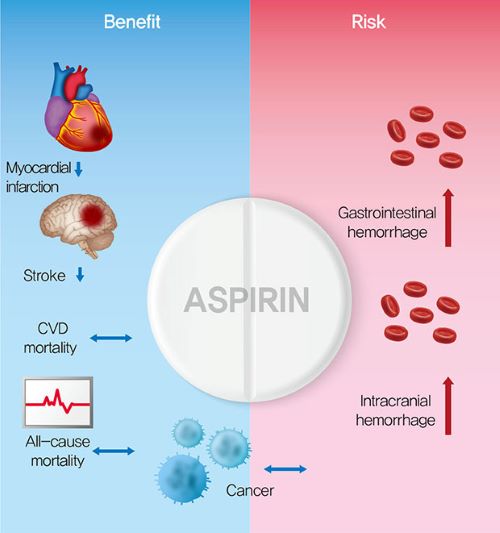
I would not try this at home. I sent my patients to a specialized medical center for treatment, Other undesirable effects induce bleeding disorders, stomach ulcers, and, in children, a very serious disease called Reye’s syndrome. The latter is so serious that aspirin is not often given to children; except when it is needed, such as in a condition called Kawasaki’s Disease, where it is very helpful.

I mention these details to counteract the blase attitude created by long use. No longer does the doctor say “Take an aspirin and call me in the morning”. For a long while, low-dose Aspirin was used in most Patients with coronary artery disease, as a method of preventing sudden clot formation. I took 65 mg. Of aspirin for years, even though I had no narrowing of my arteries.

Now it is found that aspirin can cause an excess of Hemorrhagic stroke, and it is not recommended in my age group and risk profile. Aspirin is a powerful medication with a wide variety of effects. Most of its beneficial effects have safer alternatives. Acetaminophen- Tylenol- is now used in place of Aspirin for Pain and fever relief. I suggest not using aspirin unless prescribed by a Doctor.

–Dr. C

THE DOCTORS 101 CHRONIC SYMPTOMS & CONDITIONS #6: OSTEOARTHRITIS (OA)

Osteoarthritis (OA) was considered a Degenerative disease when I went to Med School in the late 50s. I am more interested in OA since I have developed it myself.

There is a 40-60% hereditary component. My father’s mother had arthritis badly in her hands, as did my mother’s mother, and so on. A lot of genome-correlation work has shown many different genes involved,

But without a single big contributor, OA appears to be “multifactorial”, similar to a lot of common diseases like Diabetes l. Trauma can be a factor. Old sports injuries, like an ACL tear, that you thought a thing of the past, may come back to haunt you in later years.

INFLAMMATION, the most popular explanatory cause of the decade, may be operating in OA. For instance, you can imagine that OBESITY would contribute to hip and knee OA simply through the traumatic force of gravity. But obesity is also a disease of Inflammation, and increases IL-6 and other cytokines as well.

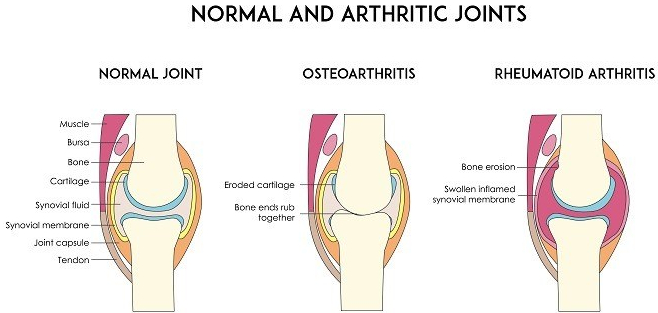
My own OA involves the classic distal 2 interphalangeal joints (go to the wikipedia manekin for a color-representation of OA classic locations). The base of my thumb, neck and back are also a problem.

Strangely, but wonderfully, my “wheels”, the Hips and Knees, are spared. I have exercised a lot in my life. Clearly, you can’t “wear out” your joints with ordinary exercise.

Our joints have evolved to allow us to move. Since bone has a lot of pain fibres, it would be painful to move the joints, directly bone-on-bone. So we have cartilage on the ends of the bones and discs between the vertebrae. The cartilage is slick to reduce friction.

Cartilage has no blood to supply it with nutrients. Instead, it relies on the joint (synovial) fluid. The cartilage is like a sponge. Walking alternately compresses and relaxes the spongy cartilage, increasing the synovial fluid circulation, thus improving the nutrition of the cartilage. If the Cartilage disappears, there is pain.

I am not a fan of pain medication. My belief was strengthened by the side effects of the study of a medication designed to genetically block pain transmission by injection into the painful joints. The side effect was virtual dissolution of the joints in a fraction of those treated. I felt more comfortable with my pain after reading the article.

Although Acetaminophen helps a little, NSAIDs usually work better, perhaps because of their anti-inflammatory action.

If, like me, you have stomach issues, there are the COX-2 inhibitors like Celebrex. The one dose I recently took was almost magical in its effects. Maybe if you don’t use pain Meds much, they work better.

I do take Glucosamine-Chondroitin, thinking that providing building blocks for cartilage couldn’t hurt. Along this line I also EAT CARTILAGE whenever I eat Chicken or ribs, being careful not to damage my teeth in the act of of exercising my jaws.

I also take Curcumin, hoping to relieve some pain, in spite of the fact that it is poorly absorbed (some brave souls take it by injection). I don’t know if any of this helps, How can you know in such a variable disorder, in the absence of controlled studies.

And pain has no OBJECTIVE markers, and is notoriously hard to study. We literally know more about the surface of mars than we know about Pain.

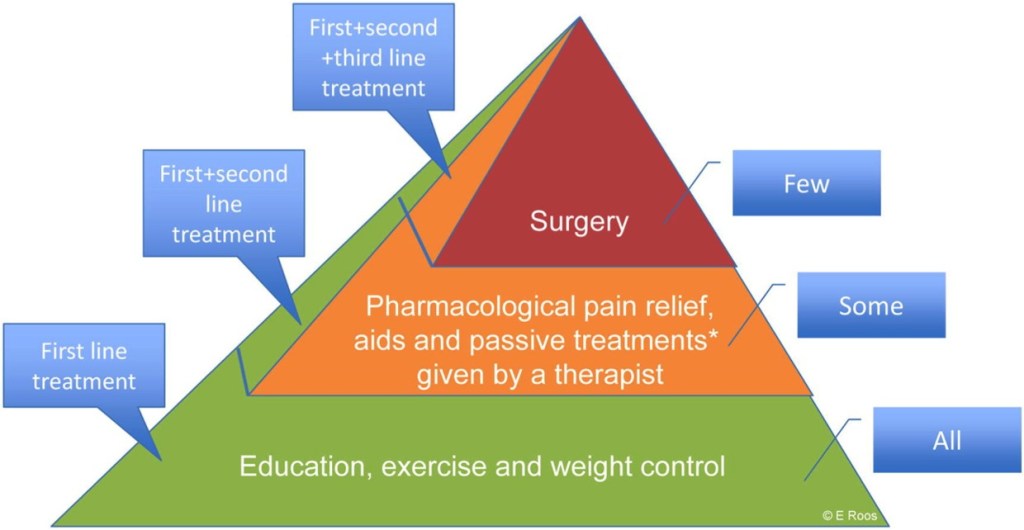
SLEEP, DIET, and EXERCISE, by minimizing OA factors kike OBESITY and INFLAMMATION are the best bet for preventing and treating OA at present.

–DR. C