
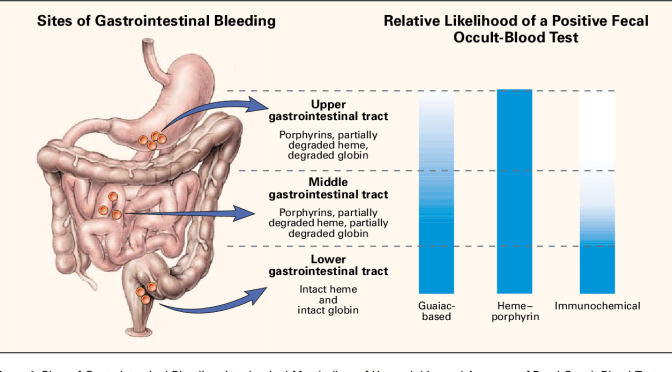
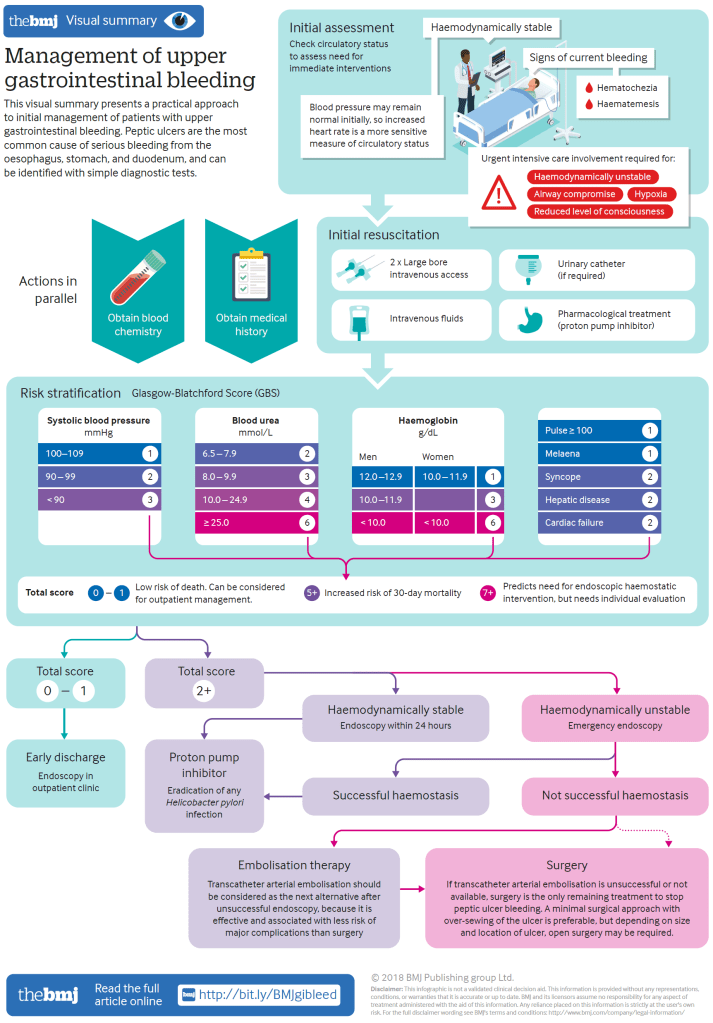
Upper gastrointestinal bleeding (UGIB) refers to gastrointestinal blood loss whose origin is proximal to the ligament of Treitz at the duodenojejunal junction. Acute UGIB can manifest in a variety of ways, with or without hemodynamic compromise, including hematemesis, coffee-ground emesis, the return of bright red blood through a nasogastric tube, melena, and, rarely, hematochezia (bright red blood per rectum). Hematochezia is typically only seen with an extremely brisk UGIB; significant hemodynamic compromise is common in these patients.[1][2]
Causes are multiple, but in developed countries bleeding is usually secondary to peptic ulcer disease (PUD), erosions, esophagitis, or varices.
UGIB results in more than 250,000 hospital admissions annually in the US, with a mortality of up to 11%.[3][4] Ordinarily, mortality is secondary to hypovolemic shock. Rapid evaluation, hemodynamic resuscitation, and appropriate pharmacologic and endoscopic interventions are the cornerstones of therapy.
 Doctors Without Waiting Rooms