
From a Stanford Medicine article (April 27, 2020):
“Far from separating us from our patients, it is actually expanding on what we can do,” said Ryan Ribeira, MD, clinical assistant professor of emergency medicine at the Stanford School.
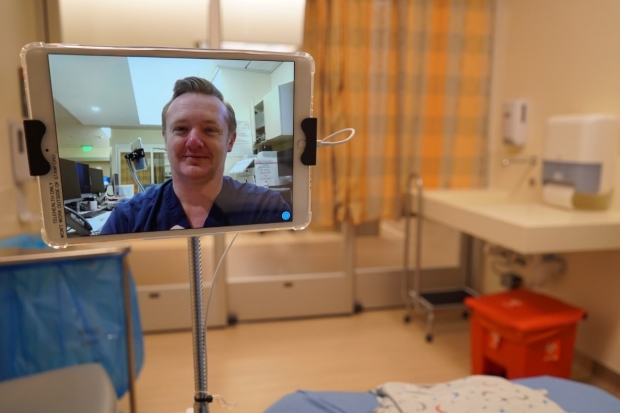
Caring for patients remotely greatly reduces the use of protective equipment — an estimated 80-120 sets per day. The risk of exposure has also been minimized for physicians, nurses and other caregivers, particularly those who are pregnant, immune-compromised or otherwise at high risk of complications from COVID-19.
When the staff at Stanford Health Care’s Marc and Laura Andreessen Emergency Department started connecting with patients in isolation via iPad, they found an unexpected benefit: The approach offered a more personal, human-centered experience.

The iPad project moved from conception to implementation in just eight days, starting with a drive-through program in a Stanford Health Care garage: Patients remained in their cars while a physician assessed them by video from inside the emergency department.
To bring the program into patient rooms, technology specialists at Stanford Health Care ensured the tablets had necessary features, such as the ability to auto-answer calls. When a caregiver calls to check in, the patient receives a few rings as advance notice, then the iPad answers itself.
The iPad has also been paired with portable handheld ultrasound scanners that quickly plug in, eliminating the need for a bulky ultrasound cart that requires decontamination after every use. And patients participating in clinical research can consent via iPad.


 Doctors Without Waiting Rooms