Tag Archives: Nose

THE DOCTORS 101 CHRONIC SYMPTOMS & CONDITIONS #55: ALOPECIA (HAIR LOSS)

Alopecia is the medical term for baldness. The word has an interesting linguistic  derivation, and comes from the Greek word Alopex, meaning fox. Foxes in Hippocrates time apparently were afflicted by hair loss from mange.

Men and women have different kinds of hair loss. In men, there is the receding hairline with age. As women age, there’s some thinning of the hair generally, and at the top of the head.
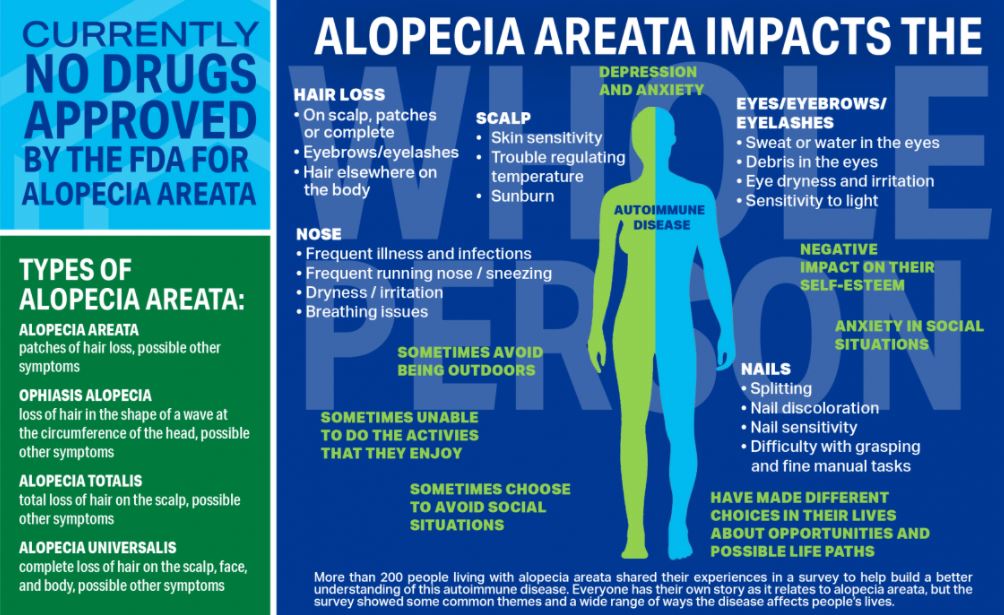
A special kind of hair loss that occurs in discrete areas is called alopecia areata. This is an auto immune disease, and is increased in frequency with people who have other autoimmune diseases. Hair loss can also be due to a fungal disease (ringworm) especially in children.

Cancer treatment can cause generalized hair loss, and we have all seen the bald children receiving cancer therapy, especially radiation.
Hair loss and regrowth comes in cycles. We all lose many hairs each day, but they regrow. When the cycle slows, there is a net loss of hair.

When I was in medical practice, my partner had early onset baldness, and was given hair transplants, which were effective. Treatments include minoxidil, which apparently increases the speed of hair cycles. An irritant, such as anthralin, will sometimes help Alopecia areaway by causing inflammation, apparently resetting  the immune reaction that’s causing the hair loss.

Finasteride, which interferes with local testosterone production, can stimulate hair growth. I take Finasteride for prostate enlargement, and was surprised to hear about it’s effect on hair growth. Maybe that’s why I have such a bushy head of hair.

Please read the following at Mayo clinic article for a more organized discussion.
—Dr. C.

Read more

THE DOCTORS 101 CHRONIC SYMPTOMS & CONDITIONS #16: NOSEBLEEDS (EPISTAXIS)

Nosebleeds afflict almost everybody at one time or another. The nose is well supplied with blood vessels, and sticks out from the face, often into other people’s business. Fistfights and falls will often cause nosebleeds in children. Kids will often pick their noses.

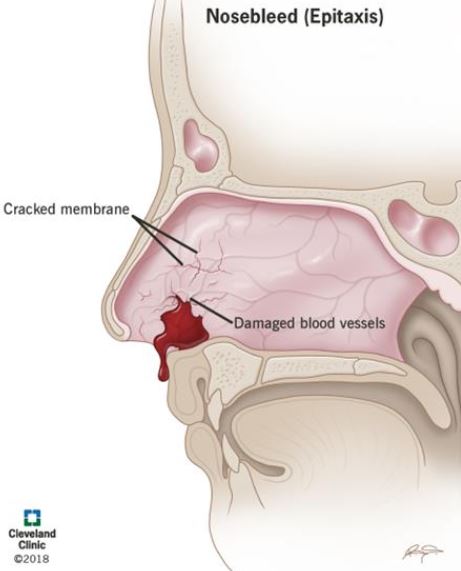
Dry air and allergies make the nose bleed more often. Sometimes, nosebleeds just happen. The bleeding usually comes from the front of the septum, the cartilaginous divider of the nose, and the best way to stop the bleeding is to lean forward and pinch the nostrils together.

This most likely compresses the bleeding area, and if held for 5 minutes or so will usually stop the bleeding. Sometimes, even after repeating this several times, and even putting ice on the bridge of the nose, the bleeding won’t stop, you may need to seek help. If the bleeding is voluminous it may originate from larger vessels at the back of the nose, and an ENT Doctor may be needed to put in a “posterior pack” of gauze.

Infrequent nosebleeds from identifiable causes are not too disturbing, but if they become CHRONIC and unexplained, a visit to the doctor and further investigation may be needed.

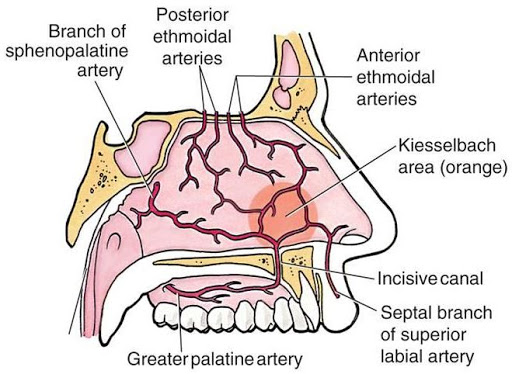
High blood pressure can be a cause of regular nosebleeds. High altitudes and the accompanying dry air can be a contributory cause. Cocaine use may irritate the nose and cause “Kiesselbach’s plexus” on the anterior nasal septum to bleed.

If you bleed a lot from your nose, especially if you have trouble with clotting from cuts or periods, you may have a coagulation problem, of which there are several, such as Von Willebrands disease.

Blood thinners are commonly used these days, and the dosage may need adjusting. For more information, please consult the accompanying article on “epistaxis” by the Cleveland Clinic, which usually has good articles on medical problems.

–Dr. C.

Read more