Tag Archives: Calories

Basal Metabolic Rate (BMR)

Cleveland Clinic (June 9, 2023) – The truth is that your body NEVER STOPS burning calories. That calorie blaze might resemble a five-alarm fire at certain times of the day, like when you’re exercising, but the flame is always lit.

Over the course of a day, your body’s natural calorie burn without any activity can range from 1,300 to more than 2,000, depending on your age and sex. (More on that in a bit.)

So, how and why do you burn calories reading, sleeping or logging long hours as a couch potato? Let’s do the math with endocrinologist and weight management specialist Marcio Griebeler, MD.

Why your body burns calories

With so much talk about “calorie burn” focused on weight loss, the true reason behind your body’s calorie needs often gets overlooked. It’s not about the numbers on the scale. It’s about survival.

“To live, you have to burn calories,” says Dr. Griebeler. “Your body burns calories to pump your heart, to breath, to think … to do everything.”

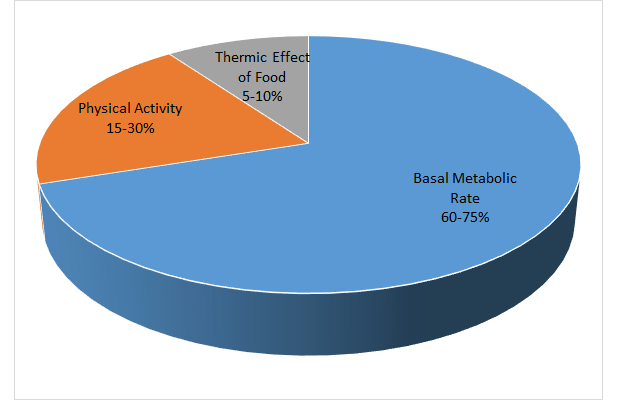
That constant burn to keep your body going is known as your metabolism. To get a little more specific, your basal metabolic rate (BMR) refers to the minimum number of calories your body needs to function.

So, as you’re doing nothing, your body is still busy and burning calories to keep all systems operational.

Calculating your metabolic rate

While we all have a BMR, we don’t all share the same BMR. It’s not some standard formula like the Pythagorean Theorem. (That’s A² + B² = C², in case you’re rusty on your middle school math lessons.)

BMR, also known as your resting metabolic rate, varies widely based on factors such as:

  • Age.
  • Height.
  • Weight.
  • Sex.
  • Muscle-to-fat ratio.
  • Genetics.

READ MORE

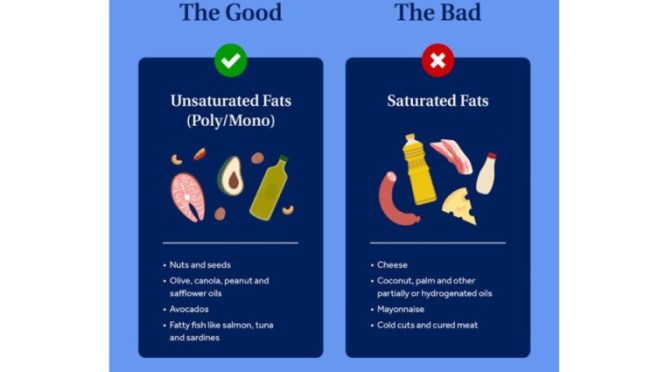
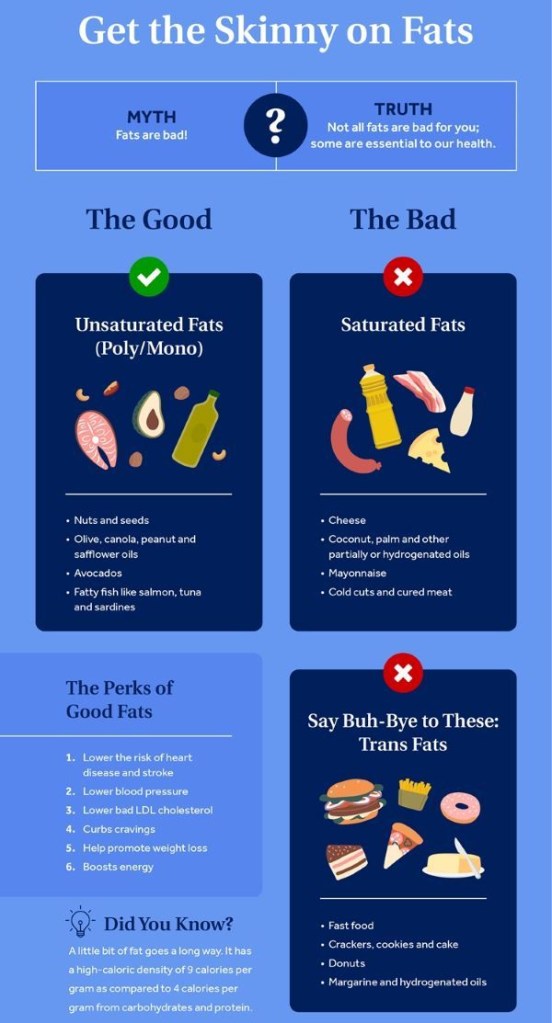
NUTRITION INFOGRAPHIC: “GOOD AND BAD FATS”

Read more

COMMENTARY:

Water, the miracle molecule, proteins and fats are the very essence of life. Water does not dissolve fat, allowing for the cell membranes, and the compartmentalization of metabolic activity that allows life to happen.

FAT IS ESSENTIAL TO LIFE. Alas, all fats are not equally beneficial to nutrition, as the article stresses. Trans-fats, partially hydrogenated fatty acids produced mainly by industry, are the worst, acting to stimulate cholesterol synthesis, produce inflammation and damage the endoplasmic reticulum.

Their use has been banned in most countries. Saturated fat has been widely condemned, is not as good as the mono- and polyunsaturated fats, but not as bad as trans-fats. Some of life’s most delicious foods, such as cheeses, contain saturated fats, but it is best to keep down their consumption.

Remember that the first bite of something savory tastes the best; prevent habit from shoveling it down. Unsaturated fats are found in oily fish, which should be part of your diet.

Vegetables such as nuts, seeds, olives, and avocados are sources of “good fat” and should comprise 10-15% of your calories. Fats, compared to carbohydrates, contribute almost twice as many calories to your diet on a weight basis, and it’s easy to get carried away.

Total calories must be kept under control. STAY HEALTHY!

–Dr. C